Sections
 
New in Denmark Work Education Organisations Healthcare Relationships and Family Culture Society
You are here: Home New in Denmark Asylum Asylum (continued)
Document Actions
  • Send Facebook
  • Send Send
  • På dansk På dansk

Asylum (continued)

The European Union has adopted the Dublin Regulation, a regulation that establishes in which country an application for asylum filed in an EU country should be processed. According to the terms of the Regulation, an asylum application can be processed in one EU country only. If an applicant has been in contact with authorities in another EU country, his or her asylum application may not be processed in Denmark. Instead, the asylum seeker will be sent to the country of first registration, where his or her application will be processed.


Alternatively, the asylum seeker may be referred to a 'safe third country' for processing. An applicant may be sent on to such a country if he or she has resided there prior to arriving in Denmark. 'Safe third countries' include Switzerland, the United States, and Canada.
During the processing of an asylum case, the asylum seeker is normally assigned to an accommodation centre. Accommocation centres are spread throughout Denmark: most are operated by the Danish Red Cross. In some cases, asylum seekers may be allowed private accommodation. Here, you can find more information about accommodation centres.

Processing an application for asylum

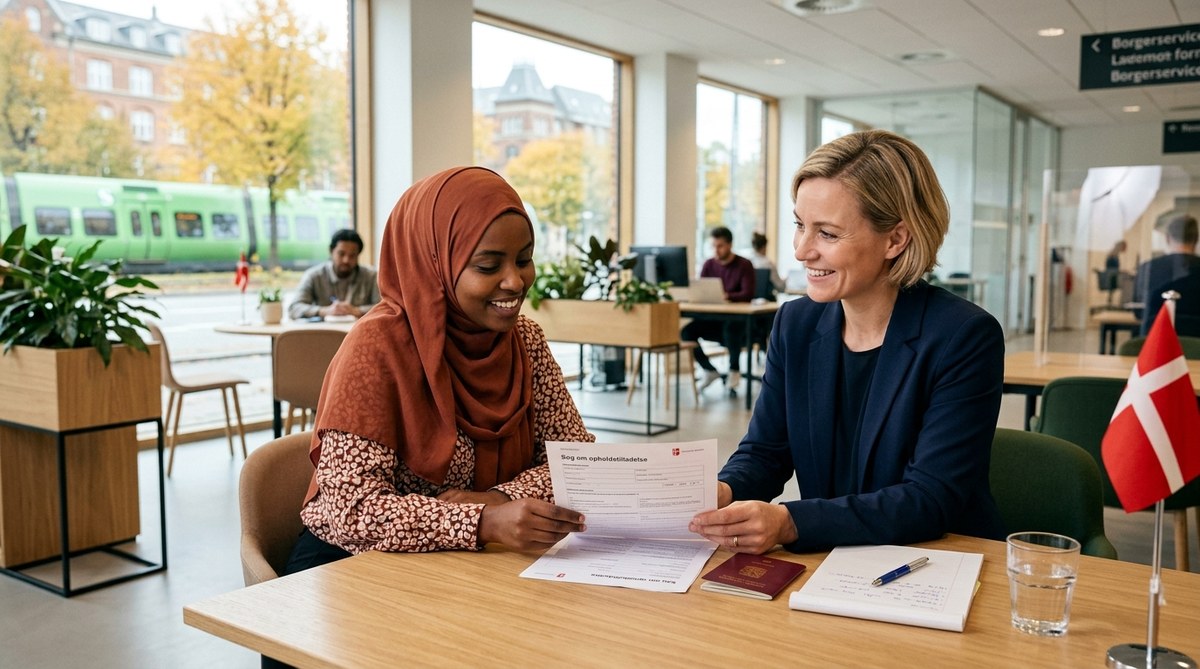
If the Immigration Service decides that an asylum application can be processed in Denmark, the Immigration Service will then determine whether or not asylum can be granted. The asylum seeker will be asked to fill out an application form in which he or she can explain in more specific terms the reason why he or she is seeking asylum in Denmark. Thereafter, the Immigration Service will interview the applicant, assisted by an interpreter. During the course of the interview, the asylum seeker has the opportunity to further clarify why he or she is applying for asylum in Denmark.

Following the interview, the Immigration Service will rule on the case, based on a factual and individual assessment of all relevant information pertaining to the case. The Immigration Service will consider the statement provided by the asylum seeker, as well as general information on conditions in the applicant's country of origin. In most cases, this will be sufficient to make a ruling on the case. However, there may be instances where the Immigration Service requires additional information, e.g. if there is doubt regarding conditions in a specific country. Here, you can read more about information on countries.

Three procedures

Most cases are processed according to normal procedure. This means that if the application for asylum is rejected, the case is referred to the Refugee Appeals Board which will make the final ruling on the case.

A minority of cases are considered manifestly unfounded. This means that the Immigration Service assesses that the applicant is clearly not eligible for asylum. These cases are sent to the Danish Refugee Council (NGO), which will make a statement on the case. If the Danish Refugee Council agrees with the Immigration Service that the application is manifestly unfounded, the application will be rejected without contest. If, on the other hand, the Danish Refugee Council disagrees, the Immigration Service will generally maintain its rejection of the application, but will refer the case to the Refugee Appeals Board for a final ruling.
In certain cases, asylum applications are processed according to an expedited version of the manifestly unfounded procedure. This happens when the asylum seeker comes from a country where, according to the most up-to-date information available, it is unlikely that the applicant would risk persecution on return. In these cases, the asylum seeker will not be asked to fill out an application form, and he or she is quickly referred for an interview with the Immigration Service. The Danish Refugee Council will then give a statement on the case. If this is in accordance with the ruling of the Immigration Service, the application will be rejected as soon as possible. These cases are processed within a few days.

When an asylum seeker is granted a residence permit

If an applicant is granted asylum, the Immigration Service will decide where in Denmark he or she is to live.

When an asylum seeker is rejected

If an asylum applicant receives a final rejection, he or she must leave Denmark immediately, but will be granted adequate time to prepare for departure. Authorities will make allowances if an applicant is suffering from an acute illness, is in an advanced stage of pregnancy, or has given birth shortly before the final ruling. A final rejection means that the applicant has no more avenues available to appeal the ruling. Rejections delivered by the Refugee Appeal Board or by the Immigration Service in so-called 'manifestly unfounded' cases are regarded as final. If a rejected asylum seeker refuses to leave Denmark voluntarily, it is the responsibility of the police to ensure his or her departure.

Residence permit on other grounds

If substantial humanitarian considerations warrant it, the Ministry of Refugee, Immigration, and Integration Affairs has the authority to grant a temporary residence permit to an asylum seeker whose application for asylum has been rejected. Very few permits of this type are ever granted.

Links


See also